
A Guide to Arranging Plants at Home the Right Way
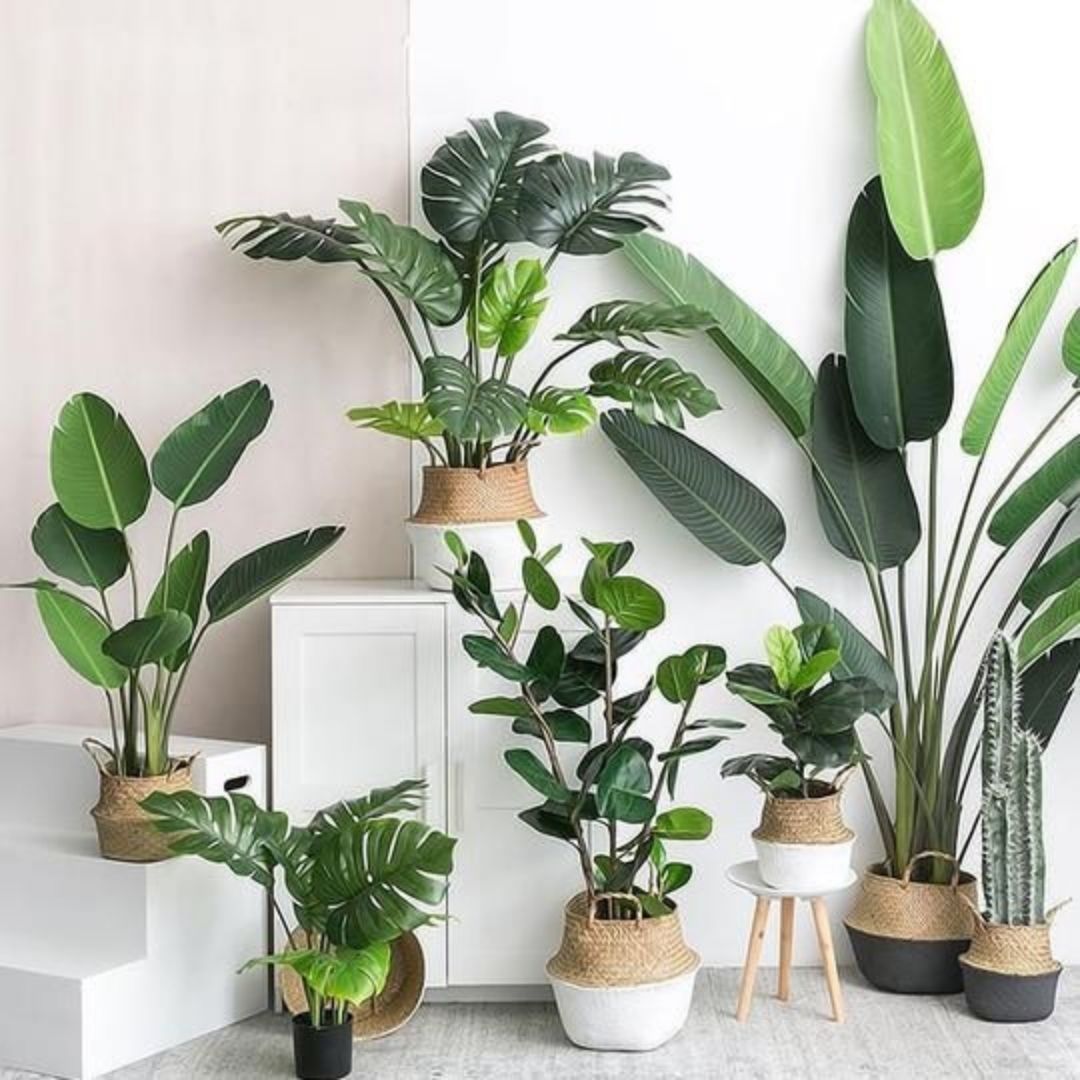
Panduan Menata Tanaman di Rumah dengan Benar. Foto: Pinterest
(2021/05/Panduan-Menata-Tanaman-di-Rumah-dengan-Benar.jpg)The gardening and plant-growing trend has continued into 2021. Plant lovers are still hunting for plants, from the latest trending varieties to ones worth millions of rupiah. Even people who didn't care for plants before have joined in. In the world of gardening, there are two types of plants you can collect: outdoor plants grown outside the house, or indoor plants that can be kept inside.
Ornamental plants have different characteristics. In the tropics, where the sun can be scorching all day, some ornamental plants don't survive well. That's why you also need to consider which types of plants you can care for based on your environment.
Outdoor Plants
One example of an ornamental plant that can handle hot sun is the cockscomb, or celosia. Its flower looks like a rooster's comb and is reddish purple. It can grow up to 90 cm tall, with a thick stem and single leaves. This plant comes from the tropics and is perfect for planting in your yard. Cockscomb will make your yard look fresher and more pleasing to the eye.
Next is the bougainvillea (paper flower), which comes in pink, white, orange, and yellow. This plant can grow thick and bushy, with hard, thorny stems. It can even grow up to 10 meters tall. Then there's the cactus, which is commonly found in deserts. Its leaves have turned into spines, which reduce water loss when it's extremely hot.
Indoor Plants
One ornamental plant that doesn't need sunlight is the aglaonema, also known as Chinese evergreen, which has a charm all its own. Its colorful leaves, ranging from green to pink to red, are a real treat for the eyes.
Fortunately, aglaonema is also an ornamental plant that doesn't need much sunlight. Like the previous plant, aglaonema is also believed to help clean the air. However, keep in mind that aglaonema needs soil that is moist but leaning toward dry. So be sure to water it regularly.
Next is the calathea, which is well suited to indoor rooms with little sunlight. Although this stunning plant is very tolerant of low or dim light, you need to keep it away from cold. Avoid placing it in drafty rooms or near vents, especially in air-conditioned rooms, and your calathea will do just fine.
Philodendrons are another good choice because they prefer filtered light, like the canopy of a tropical rainforest. If they're placed somewhere too shady, they tend to fade to a dull green. Choose a well-draining potting mix that doesn't stay wet for too long, because philodendrons like humidity but not soggy soil.
There's also the pothos, or golden pothos, which is the best indoor plant for low-light conditions. Pothos is an easy-care vine that you can grow at home in a hanging basket, climbing a plant pole, or trailing over the edge of a table or shelf.
Different Types of Plants: Sun-Tolerant or Not?
When choosing plants and deciding where to place them in your home, there are a few things to keep in mind. The right combination of plants in the right places can completely change how the rooms in your home look. Besides the living room and family room, you can also put plants in the bedroom, since each room has its own atmosphere.
But remember not to choose plants with dense foliage that need a lot of sunlight. From an interior design perspective, plants should take up one-tenth of your home's surface area. Any less, and they won't stand out as a decorative element in your home.
On the other hand, if plants take up more than one-tenth, they'll take up too much space. The living room, kitchen, bedroom, and bathroom are the most used rooms in a house, so decorating these areas with plants and flowers will give them a different feel. But again, where you place your plants should depend on the amount of light and humidity in each room.
- Hallway
This area usually gets little natural light. Place plants and dried flowers here.
- Living Room
This is an easy area to decorate with plants because it gets more light. How big the plants should be depends on the size of the room.
- Dining Room
In some homes, this area is full of household appliances and supplies. So small plants that need less sunlight are a good fit here.
- Kitchen
When choosing plants for this area, consider how often you cook and how much ventilation the room has.
- Bedroom
If it gets enough light, the bedroom is a great place for many types of plants, as long as they aren't too big.
- Bathroom
This room has the highest humidity in the house. That makes it perfect for many ornamental plants, though you need to consider how much humidity and sunlight it gets.
Don't forget to give your ornamental plants the right fertilizer so they keep thriving. You can use NPK fertilizer: Nitrogen (N) to boost lush leaf growth, Phosphorus or Phosphate (P) to boost flowering and fruit formation, and Potassium (K) to build a healthy root system.
You can also use chemical fertilizers, which are made by combining inorganic chemicals to form compounds such as ammonium nitrate or magnesium sulfate. Some advantages of chemical fertilizers are that they're cheap and easy to find, and fast-growing plants such as annual flowers absorb their nutrients quickly.
As a state-owned enterprise, PT Pupuk Kalimantan Timur (Pupuk Kaltim) produces a range of plant fertilizers, including ammonia, urea, and NPK fertilizer, for both domestic and international markets. For subsidized fertilizer distribution within the country, Pupuk Kaltim's marketing area covers two-thirds of Indonesia, including Eastern Indonesia all the way to Papua, and most of East Java and Kalimantan, except West Kalimantan.
The company has also developed a range of eco-friendly products. Its biofertilizers (Biotara and Ecofert) use high-performing microbial active ingredients with organic carriers (compost and humates) and minerals (zeolite). (*)