
Are You Team Cactus or Team Caladium? Here Are the Benefits of Each
cara menanam kaktus dan keladi
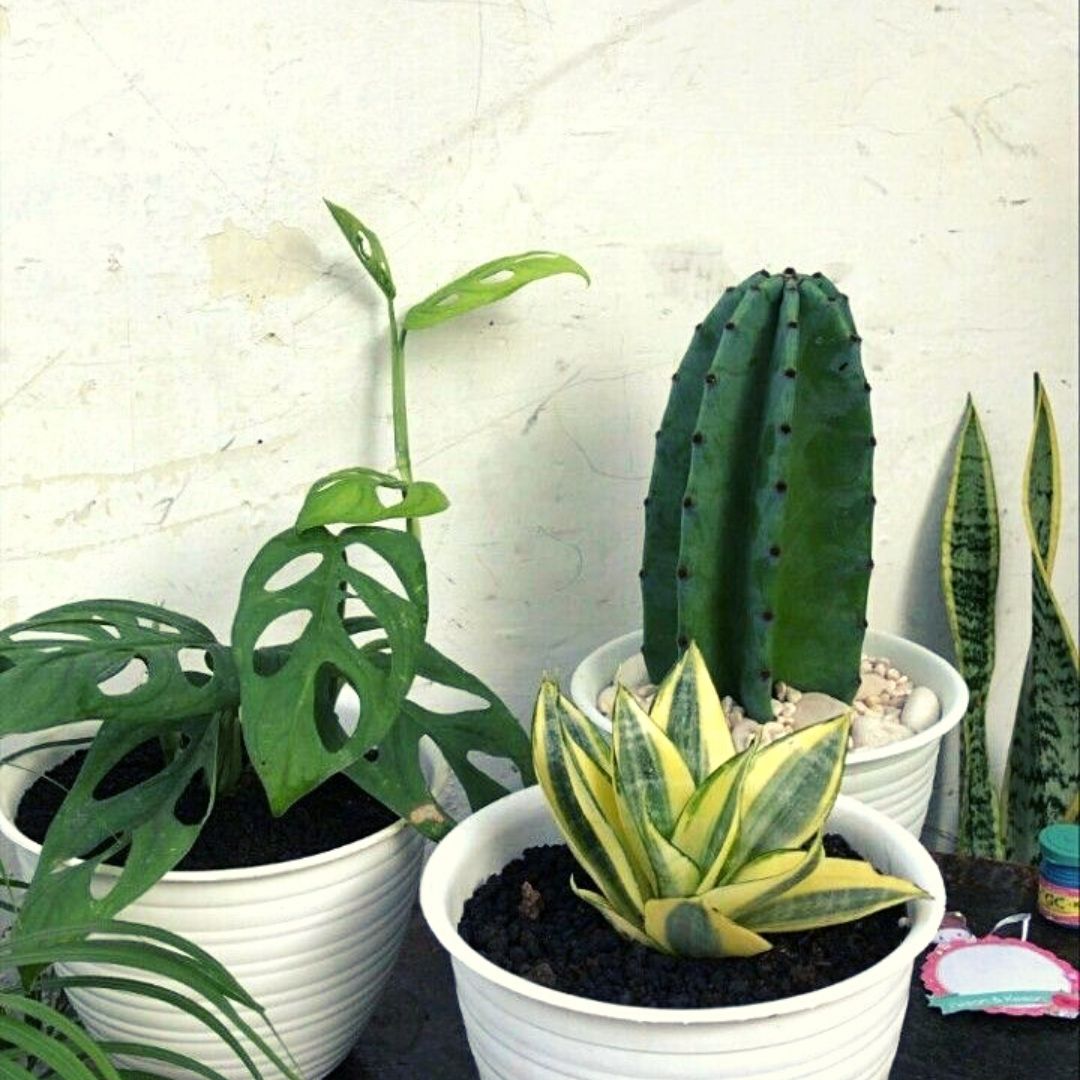
(2021/05/cara-menanam-kaktus-dan-keladi.jpg)During the COVID-19 pandemic, all kinds of ornamental plants became a big hit, with people racing to collect them. But the most popular were cacti and caladiums. Both have a special charm thanks to their unique colors, shapes, and sizes. So which team are you on, cactus or caladium? Read on to find out more.
The Charm of Cacti
Cacti are plants that belong to the Cactaceae family. There are more than 2,000 varieties in all kinds of colors and shapes. The natural habitat of cacti is the desert.
What makes cacti unique is that they can live and grow without water for a very long time, which is why they're commonly found in dry areas such as deserts.
Cacti are also known as succulents because parts of the plant, such as the stems, roots, and leaves, can store water to survive drought. Cactus roots are very long and spread wide, helping the plant absorb more water to store in its stem.
Cacti also have complex root systems. Even small cacti have large roots. The roots anchor the plant and help it get as much water and minerals as possible.
The cactus's spines are actually its leaves. Their shape is adapted to the limited water supply, so the plant doesn't lose too much water through evaporation. There are many kinds of cacti in a wide variety of shapes, sizes, and colors, and these are worth considering when you decide which one to keep.
Several types of cacti, such as Parodia, Haworthia (Zebra Cactus), Beaver Tail, Cephalocereus senilis, Pincushion, Fairy Castle, and the ornamental Gymnocalycium, are good choices for beginners because they're extra hardy and easy to care for.
The benefits of keeping cacti indoors mainly have to do with clean air. For example, they help with breathing by absorbing carbon dioxide, the waste gas we breathe out, and turning it into a source of nutrients for the cactus.
Indoor cacti also release fresh oxygen for you to breathe, especially at night, which can really help improve your sleep. Cacti are great at cleaning the air and removing toxins.
This, of course, makes a room more comfortable to be in. Research by NASA found that cacti can remove 87 percent of volatile organic compounds (VOCs), such as benzene and formaldehyde. These compounds are often found in carpets, cigarette smoke, shopping bags, books, and ink.
Indoor cacti can also help improve focus. According to a study from the University of Michigan, having plants near you can improve memory retention by 20 percent. A study in the United Kingdom also found that students paid 70% more attention when studying in a room with plants.
Indoor cacti can also help prevent illness. About 10 percent of the moisture in the atmosphere is water released by plants. Research from the Agricultural University of Norway found that sickness rates in offices with plants dropped by 60%.
Good humidity helps you avoid dry skin, dry coughs, and sore throats. Cacti are also known to be very effective at killing bacteria, so you can use them to help protect your health.
The Charm of Caladiums
Caladiums are a group of plants in the genus Caladium. They belong to the Araceae family, which includes many genera, such as Aglaonema, Alocasia, Syngonium, Alocasia, Xanthosoma, Zantedeschia, and Caladium.
Caladiums usually grow in humid areas such as lush, shady tropical forests. They usually grow under large trees, along riverbanks, and in places with temperatures of 21–30 degrees Celsius. This ornamental plant always needs enough water, but it shouldn't get too much direct sunlight, or it may go dormant.
That's why you need to pay attention to when you water it. In the rainy season, water your caladium every two days, and in the dry season, water it once a day. But remember not to overwater your caladium, as this will make it rot.
Several popular types of caladium are worth knowing, such as red caladium or Caladium bicolor, keladi tikus or Caladium stingray, keladi wayang, Blackjack caladium, Polka Green caladium, and variegated caladium. Caladiums, especially keladi tikus, are even believed to fight cancer cells because they contain Ribosome Inactivating Protein (RIP).
On top of that, keladi tikus is also high in antioxidants and curcumin. Both are important in cancer therapy and in preventing this deadly disease. Besides cancer, it can also help treat other conditions, such as pain, boils, coughs, and inflammation. Caladiums can also help relieve stress, since some types work almost like a sedative. You can place a caladium in a corner of a room or in your workspace.
Although caladiums are fairly easy to care for, fertilizing is something to pay attention to. Several types of fertilizer are suitable, such as compost, which is considered the safest and most standard option for caladiums.
Compost can improve the nutrients, minerals, and other elements in the soil. These are exactly what the plant needs. Another option is Gandasil D fertilizer, which contains 20 percent nitrogen, 15 percent phosphate, 15 percent potassium, and 1 percent magnesium. The rest is made up of elements and compounds such as manganese, boron, copper, cobalt, zinc, and vitamins that support plant growth.
You can also feed caladiums Dekastar fertilizer. Dekastar is a slow-release fertilizer that releases nutrients gradually, so you only need to fertilize once every 6 months. Dekastar has a balanced NPK content, which is great for supporting the growth of roots, leaves, and stems.
When it comes to NPK fertilizer, one of the largest producers is PT Pupuk Kaltim, which offers NPK Pelangi. This new product is designed to improve farmers' welfare.
NPK Pelangi's advantages include increasing yields by more than 40%, being easy to spread and quickly absorbed, making stems sturdier and resistant to lodging, being suitable for all types of crops, making soil more fertile, providing complete and balanced nutrients, being made from quality materials, and being safe for the environment. NPK Pelangi comes in 4 types: NPK Pelangi MAXI, NPK Pelangi UNGGUL, NPK Pelangi PRIMA, and NPK Pelangi SUPER. (*).