
Growing Tomatoes Takes the Right Technique
Menanam Tomat Itu Ada Tekniknya
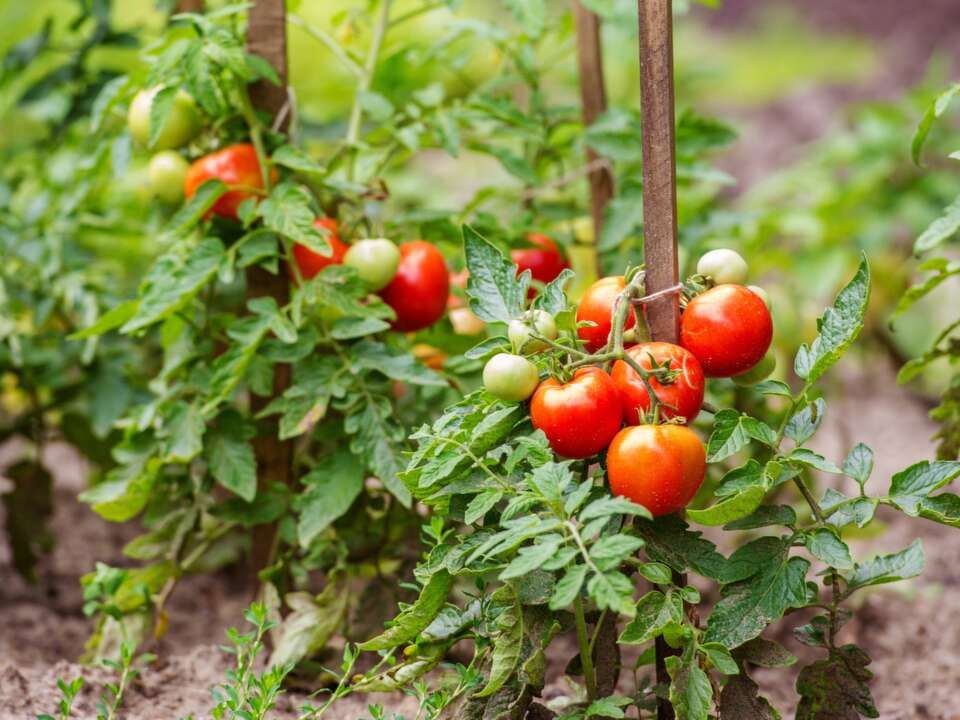
(2021/04/Menanam-Tomat-Itu-Ada-Tekniknya.jpg)Tomatoes have the Latin name Lycopersicum Esculentum Mill. Tomatoes are both a vegetable and a fruit that are quite well known and easy to find. They are commonly made into sambal and sauces, used as an extra ingredient in many kinds of dishes, and turned into drinks such as tomato juice.
Besides being cooked or processed, tomatoes can also be eaten raw. They taste fresh, sweet, and slightly sour. Tomatoes also look quite pretty: the fruit is smooth, glossy, and bright red when ripe. It's no wonder so many people like them.
Tomatoes taste good, and they're also packed with nutrients and vitamins. They are rich in vitamin A, which is good for the eyes. Tomatoes are also known to aid digestion, lower cholesterol, support heart health, prevent cancer, strengthen bones, keep skin healthy, and prevent depression.
Because of all these benefits, tomatoes are a favorite plant to grow, whether in a garden or a home yard. Growing tomatoes is fairly easy and doesn't require a lot of land.
The first thing you need to do before planting tomatoes is choose good-quality seeds. You can easily buy quality seeds at agricultural supply stores or online through e-commerce.
You can also make good-quality tomato seeds yourself from fully ripe tomatoes. Sustainable tomato farmers usually produce their own seeds. To do this, choose a tomato plant that grows vigorously and bears plenty of fruit. Remove the seeds, clean them, and dry them in the sun until only about 6% moisture remains.
The type of tomato seed should also suit your local growing area. If you live in the highlands, choose a highland tomato variety. If you're planting in the lowlands, choose a lowland variety. Examples of lowland tomatoes are the Ratna, Mutiara, Zamrud, and Opal varieties. Highland varieties include Berlian, Mutiara, and F1.
Some tomato varieties are suitable for both highlands and lowlands. Seed producers have also developed tomatoes that can be grown in both, one example being a product from Panah Merah.
Once you have the right type of tomato seed, you can move on to planting. You can plant it in your yard or simply use a pot. Here's how to plant tomatoes in the ground and in pots, plus how to care for them, which you can easily put into practice.
How to plant tomatoes in your yard:
- Choose a spot with full sun and well-drained soil. It's important that the area gets at least 6 hours of sunlight every day.
- Two weeks before planting your tomatoes outdoors, dig the soil to a depth of 30 cm and mix it with compost.
- Space the tomato plants about 60 cm apart.
- Put stakes or cages in the ground at planting time to avoid damaging the roots later on.
- Pinch off some of the lower branches of the tomato plant, and plant the roots deep enough that the lowest leaves sit just above the soil surface.
- Water well to reduce transplant shock to the roots.
How to plant tomatoes in pots:
- Use a large pot or container with drainage holes at the bottom.
- Use soil that isn't too compact so water drains well. A good soil mix with added organic matter is recommended.
- Plant one tomato plant per pot. Choose bush or dwarf varieties; many cherry tomatoes grow well in pots.
- Place the pot in a sunny spot that gets full sunlight for 6–8 hours a day.
- Keep the soil moist. Soil in containers dries out faster than in a garden, so check it every day and give extra water.
Caring for tomato plants:
- Water tomato plants in the morning. This gives them the moisture they need to get through hot days. Avoid watering in the afternoon or at night.
- Apply mulch (material that covers the soil to keep it moist and suppress weeds and disease) five weeks after planting.
- To help tomatoes get through dry spells, find some flat stones and place one beside each plant. The stones keep water from evaporating from the soil.
- Give tomato plants fertilizer or compost every two weeks, starting when the fruits are about 2.5 cm in diameter.
- As the plants grow, prune the leaves to get the best fruit growth. This also helps keep diseases from spreading from the soil to the foliage.
Harvesting tomatoes:
- Tomatoes can be harvested 2.5 to 3 months after planting.
- A tomato is ready to harvest when about half the fruit has changed color from green to red. Another sign is that the edges of the older leaves have dried out.
- After picking, don't put fresh tomatoes in the refrigerator. Doing so can ruin their flavor and texture.
Fertilizer for Tomato Plants
Tomatoes are one of the most popular horticultural crops, and a good harvest depends on proper nutrition. Growers need to understand what nutrients tomatoes need at each growth stage. One fertilizer recommended for tomatoes is NPK Mutiara.
In the vegetative stage, tomatoes, which belong to the Solanaceae family, need more nitrogen than other nutrients. Nitrogen (N) is a component of enzymes and proteins involved in plant metabolism. When the plant gets enough of this essential nutrient, it can reach its full height.
In the generative stage, tomato plants need more potassium (K), calcium (Ca), and boron (B) than other nutrients. Tomatoes need K to help the roots absorb nutrients better and to send more photosynthates to the fruit. This increases fruit weight.
Ca plays an important role in maintaining fruit quality, keeping cells intact, and supporting fruit growth. When the plant gets enough Ca, fewer fruits will develop blossom end rot (BER) compared with normal fruits. BER is a physiological disorder in tomato plants caused by a lack of Ca during fruit formation.
The Purpose of Pruning Tomato Plants
Pruning is an important part of caring for tomato plants and keeping them productive. Pruning the leaves helps the fruit grow as well as possible, since too many leaves can hold back fruit growth.
Tomato plants that are too bushy, with lots of leaves and branches, generally produce small fruits. This is because the fruits don't get the full benefit of the nutrients produced by photosynthesis, since they have to share them with all those leaves.
Besides helping the fruit grow, pruning tomato plants also helps control humidity and prevent pest and disease attacks.
According to Pertanianku.com, there are three pruning techniques for tomato plants:
- Pruning Young Shoots
Too many shoots on a tomato plant can hold back the plant's own growth. You need to control the number of shoots to keep productivity high and let the fruit develop fully.
Shoots that grow between the stems in particular should be pruned so that only the main stem and leaves remain. You can do this by hand, with clean hands, by snapping the shoots off. - Pruning the Stem
Stem pruning is done when two leaves have grown above the fifth fruit cluster. The goal is to speed up fruit ripening. However, if a strong shoot is growing on the stem near the fifth fruit cluster, that stem doesn't need to be pruned.
Tomato plants are most productive when each stem has only 2–3 branch shoots. Use a sharp knife for pruning. - Pruning Flowers and Fruits
Pruning tomato flowers and fruits is also needed to get the best growth. Ideally, each tomato plant should produce only 6–8 fruits per cycle.
Reducing the number of fruits can greatly improve their quality. The fruits that are left will grow fully and reach premium quality. However, if you don't need very high quality, for example when selling to a local market, you don't need to prune the flowers and fruits. (*)